Archive by Author

Housing Justice course at Denver Seminary, June 22-July 2, 8:30-12, 2015

11 Apr

Denver Seminary offers a unique Master of Arts degree in Justice and Mission, with courses on social issues like immigration, health justice—and now, housing justice. Housing Justice is a new course that will be offered June 22-July 2, 2015. I’m thrilled to be teaching this two-week intensive at my alma mater, and invite you to join us.

This course is open to anyone, not just Denver Seminary students. Note the registration dates below—however, the registrar needs a count on the number of students by May 10. International students will need to be register by March 10. So if you or someone you know is interested, please enroll soon.

Course Description

Housing Justice: Theological and Practical Foundations (JM 645): Develops a theological and practical understanding of how housing justice is part of God’s mission. It provides a comprehensive look at ways to house communities in light of biblical land use laws and the just and fair distribution of land and housing. Case studies are examined, which includes how churches and Gospel-driven visionaries are addressing the housing crisis, creating affordable housing, and transforming people and communities. Interactive assignments and site visits provide first-hand experience to engage with affordable housing developers and best practice models. Two hours.

To further pique your interest, here’s the reading list for the class – some really powerful and inspiring works!

Required Reading
  • A Decent Home: Planning, Building, and Preserving Affordable Housing, Allan Mallach
  • Making Housing Happen: Faith-based Affordable Housing Models, 2nd Edition, Jill Suzanne Shook
  • Streets of Hope: The Fall and Rise of an Urban Neighborhood, Holly Sklar
  • The Biblical Vision of Sabbath Economics, Ched Myers (available on Ched’s website)
  • The Land: Place as Gift, Promise, and Challenge in Biblical Faith, 2nd Edition, Walter Brueggemann
Suggested Reading
  • A Theology As Big As the City, Ray Bakke
  • A Theology of the Built Environment: Justice, Empowerment, Redemption, Timothy J. Gorringe
  • City of God, City of Satan: A Biblical Theology of the Urban Church, Robert C. Linthicum
  • Real Hope in Chicago: The Incredible Story of How the Gospel Is Transforming a Chicago Neighborhood, Wayne Gordon
  • Roots for Radicals: Organizing for Power, Action, and Justice, by Ed Chambers
  • Sidewalks in the Kingdom: New Urbanism and the Christian Faith, Eric O. Jacobsen
  • The Theology of the Hammer, Millard Fuller
  • Theirs Is the Kingdom: Celebrating the Gospel in Urban America, Robert Lupton

A link to the course and all books are available through the Denver Seminary bookstore website under Summer 2014.

Course Registration

1) If you’d like to take the course for earned credit, you’ll need to apply for admission. You can apply as a non-degree student, which is a much quicker process than for degree applicants. For more information, contact: admissions@denverseminary.edu. The cost is $540 per credit hour and please register as soon as possible.

2) For auditing, there are two options:

a. Audit with record: You’ll receive a transcript of your course audit. This requires a brief application process – contact admissions@denverseminary.edu. The cost is $175 per credit hour.

b. Audit without record: No transcript will be provided. This option is just $35 but applicants need to meet one of the following criteria:

    • Denver Seminary graduate
    • Mentor of a current student or of the student’s spouse
    • Spouse of a currently enrolled student
    • Full-time employees of Denver Seminary and their spouses/children
    • Denver Seminary board members
    • Individuals ages 65+ years
    • Full-time Christian employees of non-profit Christian organizations

To audit without record, contact the registrar’s office (registrar@denverseminary.edu) and apply at least a month before the course begins. Seating is limited to 10% of the class enrollment and is first come, first served, so apply early.

Please feel free to share this information with anyone who might be interested, especially those in the Denver area. If you have any questions, don’t hesitate to contact me at jill@makinghousinghappen.net. I hope to see you in June!

Intentional Neighboring, Transformed Neighborhoods – Part Four

11 Apr

This post (the final in a series on Charis Community Housing) discusses some of the challenges of revitalization – and the results that make it worthwhile. (Part One relates how the ministry began. Part Two looks at Charis’ philosophy and methods, and Part Three describes how vacant properties are turned into attractive homes.)

New owners who purchased a Charis Community Housing renovated home.

New owners who purchased a Charis Community Housing renovated home.

In addition to affordable housing, economic development is an important part of revitalizing a community. Residents also need places to buy food, and other essential services such as public transportation. But it can be challenging to bring markets and other businesses into an area seen as “low income.”

“You need to understand the financial realities of bringing a supermarket to an area where discretionary income is not high,” explains Jim Wehner, Charis’ executive director. Much of a market’s profit is not from food but “extras” such as paper goods and magazines, which low-income residents may not easily afford.

In the East Lake Community, the grocery chain Publix had to be talked into opening a branch. But today, over 12 years later, the store is doing well – a testament to the successful development efforts by Tom Cousins, Charis, and others in partnership with residents.

Ultimately, once homes are fixed up and occupied, the residents themselves bring most of the revitalization, notes Jim. They build a sense of community, look out for one another, and band together to address issues affecting them.

A recent example is a two-block stretch of 12 houses in South Atlanta. Eighteen months ago, just three were occupied. The vacant homes had been totally stripped of electrical wiring, plumbing fixtures, anything of value – leaving them open to drug deals and other crimes. Charis rehabbed three homes as affordable housing and three as market rate; two investors also bought homes (one as a Section 8 rental and one at market rate).

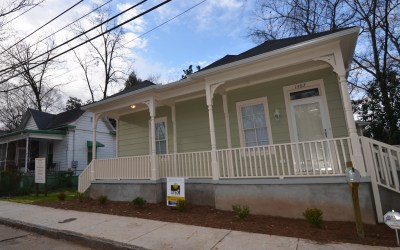
Charis is rehabbing damaged vacant properties into attractive homes that are revitalizing South Atlanta streets.

Charis is rehabbing damaged vacant properties into attractive homes that are revitalizing South Atlanta streets.

Now 11 of the 12 homes have families. “Everyone knows everyone, and there’s very little crime,” says Jim. “It doesn’t mean everything’s peachy, but the street has been transformed.”

For homeowners like Tracy and Mary Hancock, living in such a transformed neighborhood is a “dream come true.” Several years ago, the couple bought a house in Ormewood Park – one of the first communities where Charis worked.

The path wasn’t easy, Tracy and Mary admit. Often, after working all day, they felt like skipping their evening homeownership classes. With ongoing encouragement from Charis staff members (who’d call to remind them before each class), they stuck it out. Now, they’re both so glad they did – and in fact, they’d like to see more classes in the future.

The Hancocks love the economic and ethnic diversity of Ormewood Park. They’ve become active members of the neighborhood, helping with the community garden, cleanup days, and other activities. And Charis, they say, is the “goldmine” that has allowed them to “own a piece of the earth” in the “best part” of Atlanta.

—–

The story of how FCS Urban Ministries and Charis began is featured on pages 81-86 of Making Housing Happen. You can read an excerpt of the chapter here, and purchase the book from Wipf and Stock Publishers.

Intentional Neighboring, Transformed Neighborhoods — Part Three

8 Apr
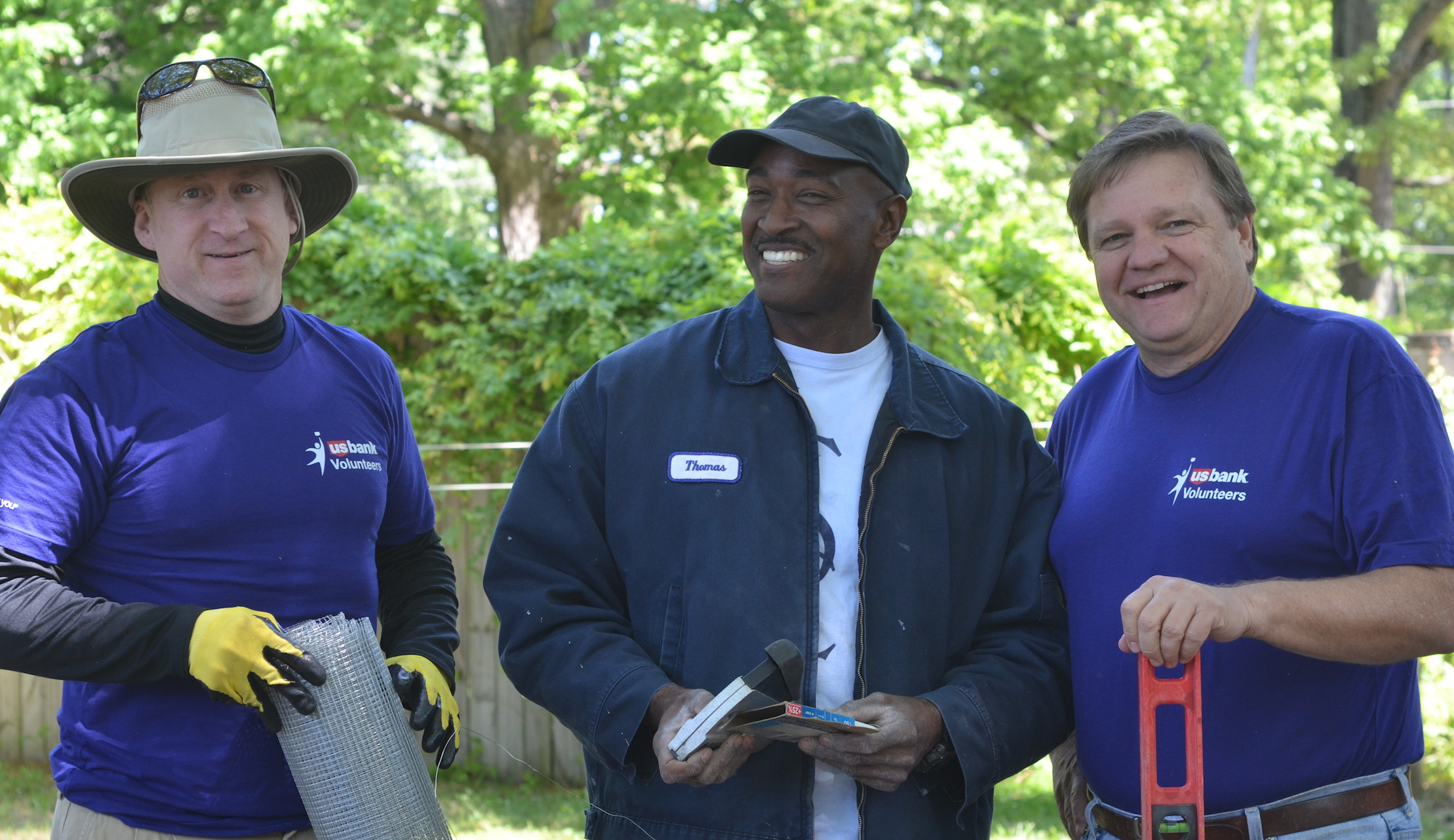
Mr. Kim (center), shown with volunteers, is a contractor partnering with Charis to renovate vacant homes.

Mr. Kim (center), shown with volunteers, is a contractor partnering with Charis to renovate abandoned homes.

This blog is one of a series on Charis Community Housing. Here, we look at some of the details of how vacant properties are turned into attractive homes. (Click here to read about how the ministries began, and here to learn how they work to develop affordable housing.)

As part of its mixed-income strategy to help neighborhoods succeed, Charis has set a five-year goal to help the South Atlanta neighborhood reach 60% in market-rate and workforce (moderately priced) homes and 30-35% affordable homes. Most South Atlanta homes are rentals, and 75% of lower-income residents are renters. About a third of the 2,000 residents are low-income.

Charis’ current housing work centers on foreclosure remediation. Roughly 150 homes are vacant due to the ongoing foreclosure crisis. The organization buys abandoned properties, renovates them, and resells them to families as a mix of moderate-rate and affordable housing.

A shift from construction to renovation

Previously, Charis also built new affordable homes for families earning between 50-80% of the median area income. Eligible homeowners could make a down payment, put in some “sweat equity,” and receive a 20-year interest-free mortgage, made possible by donor funding.

But when the mortgage crisis hit in 2008, Charis needed to change its tactics. “We knew that the neighborhood was suffering from an incredible increase in vacant houses — over a quarter of homes,” says Christy Taylor, assistant director of community development. “No resident escaped the impact. Crime skyrocketed.”

With residents asking for neighbors for the vacant homes, Charis put new construction on hold and asked a group of developers to find a creative solution. The result: an LLC (limited liability company) funded by investors, which enables Charis to purchase and reclaim several vacant houses at a time.

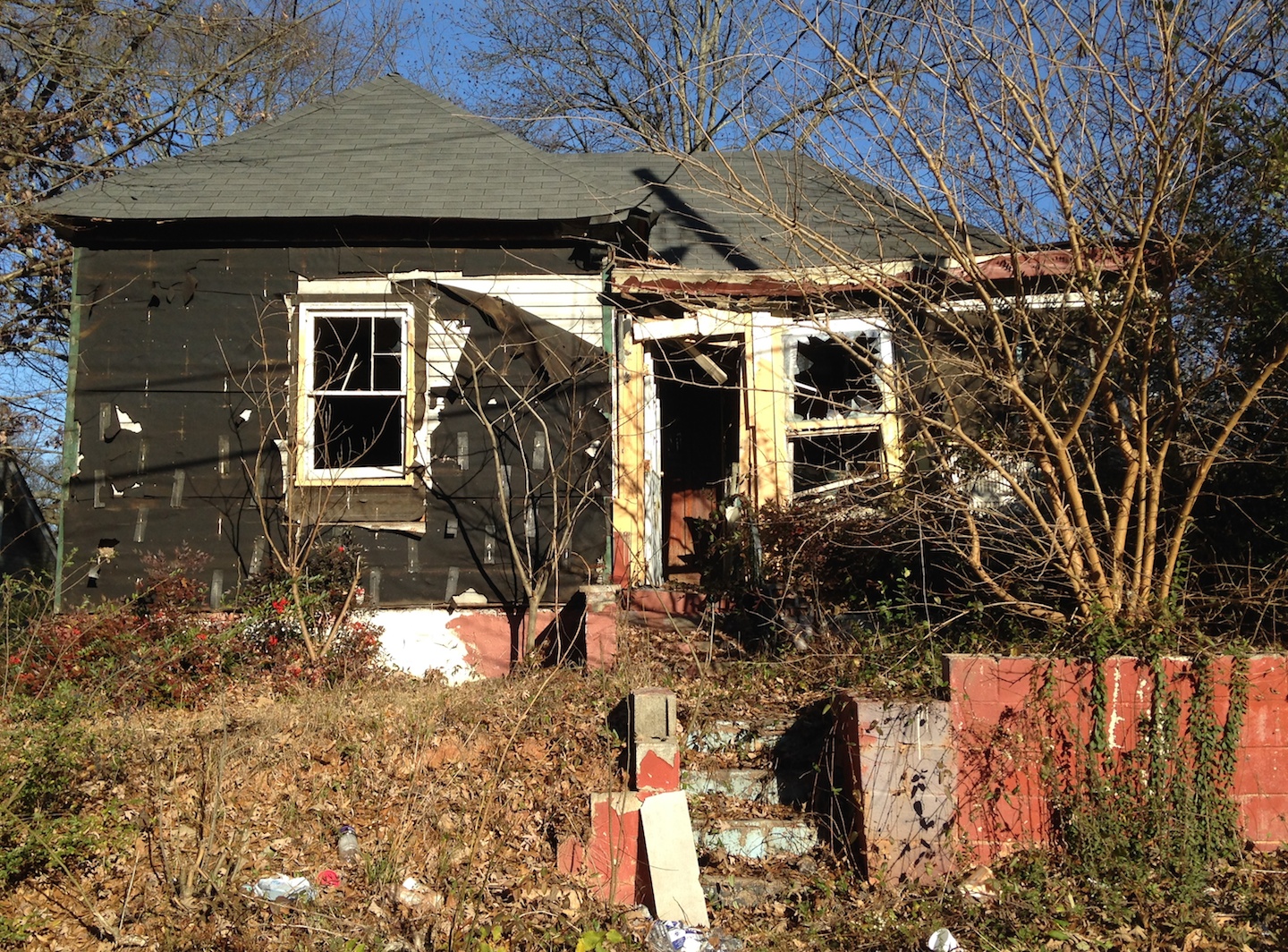
An abandoned and stripped home

An abandoned and stripped home.

“Just about all of these vacant houses need major renovation,” Christy notes. The homes have either been neglected for many years, or were stripped by looters of copper wiring and other valuable fixtures, leaving huge holes in the walls.

Charis can buy abandoned homes for around $25,000 and fix them up for $60,000 to $70,000. Because the funding comes from an investment pool and the ministry must be able to quickly buy foreclosed homes to secure them, the renovated homes are currently sold on the open market for around $120,000 to $132,000.

To attract higher-income buyers, these moderate-rate homes include “nice finishes, such as solid countertops, tile bathrooms, and hardwood floors,” says Jim Wehner, executive director of Charis. The organization receives a fee from the sale when possible, and the remaining profit is reinvested back into the pool for the next purchase.

Relationships are still the key to success

Because of Charis’ relationships, even several lower-income families have been able to afford these homes, averaging about $125,000. In these cases, the purchase is made possible through partnering with two local housing counselors, who connect homeowners with federal down payment and mortgage assistance programs. “We had one single grandmother raising her children who at the end of the day paid around $60,000 for her two-story home!” says Christy.

Previously, by providing its own loans for new affordable homes, Charis had developed long-term relationships with homeowners, says Jim. Staff have often become more than just the mortgage lender — they celebrate with homeowners when loans are paid off, and walk alongside them in times of hardship.

Now, to maintain relationships with buyers of renovated homes (whose loans are from other lenders), Christy offers each a Charis welcome packet. The kits include a “South Atlanta” house sign from the neighborhood Civic League, along with letters from the Civic League president and Christy that introduce newcomers to neighbors, local history and resources, and ways to get involved.

Although Charis’ interaction with homebuyers has changed somewhat, the current focus on foreclosure renovations has had many benefits. The LLC funding strategy opened the way for Charis to work with moderate-rate housing (which they hadn’t done before), while providing an excellent 3-4% return to investors.

Most importantly, turning vacant properties into beautiful, moderately priced homes is luring new residents and lowering crime. The work has helped Charis move toward the goal of mixed-income housing throughout South Atlanta.

“These homes are more affordable than market rate but let us bring in higher-income neighbors,” Christy notes. In turn, by lifting up the entire neighborhood, “That helps the true affordable homes to be sustainable” – ensuring that homes are available in a safe, strong community for families at all income levels.

*Atlanta Habitat for Humanity, which partners with Charis in South Atlanta, builds homes for residents below 50% of median income.

—–

The story of how FCS Urban Ministries and Charis began is featured on pages 81-86 of Making Housing Happen. Read an excerpt of the chapter here, and purchase the book from Wipf and Stock Publishers.

Youth Moving On in Pasadena

4 Apr

This guest post is by Norma Fain Pratt, PhD, a fellow member of our Greater Pasadena Affordable Housing Group. She and I recently toured the Youth Moving On Peer Resource Center. Youth Moving On is a program of Hillsides, an organization dedicated to the well being of children and youth that is affiliated with the Episcopal Housing Alliance.

We were met by Aurelio Mitjans, Youth Advocate, to take Jill Shook and me, members of the Greater Pasadena Affordable Housing Group, to have a look at the attractive and modern facility of Youth Moving On’s Peer Resource Center at 456 E. Orange Grove Blvd, suite 140 in Pasadena.

Articulate and informed, Aurelio described the functions of the Peer Resource Center as a “one-shop-stop” for centralized services and support for transition-age youth ages 16-25. Many of the participants, he noted, come from foster homes while some have been homeless or are recovering from drug abuse or serious domestic dysfunction.

The PR Center consists of a set of large rooms and offices with computers, a television set, desks, and a conference table. The young people were seated in groups engaged in lively discussions or individually, reading. The Youth Moving On program is multifaceted. Several of their training aspects include career counseling, on-site tutoring in academic and vocational subjects, mutual support groups, health and wellness seminars, and social and psychological therapy.

Privately financed, Youth Moving On resources are funded by Hillsides, with the support of the Everychild Foundation and other individual investors. To help achieve stability, the program also provides certain basic needs like food, clothing, hygiene products, and school supplies. They also provide internships, subsidized education/scholarships, and linkage to other support service providers.

Aurelio was especially proud of the housing programs developed by Youth Moving On.  There are two types of housing available: transitional and permanent. The permanent program is located in Los Angeles, but we got to see the transitional housing, consisting of 12 units embedded in a larger, 48-unit beautifully manicured apartment building on Oakland Avenue.

These twelve units provide 24 beds around the corner from the Peer Resource Center. The young occupants are carefully supervised and benefit from supportive advice and education, which assists them in learning individual strengths, community skills, and goals for success.

The Youth Moving On program has served more than 900 youth, and the Peer Resource Center has received more than 5,000 visits since its opening in April 2013. There have been many achievements for Youth Moving On participants.  Significant numbers have entered the workforce and have graduated from local community colleges, state universities, and even University of California schools.

Certainly, Youth Moving On is a Cadillac program – a model for any new youth programs to be developed nationwide.  Diverse in population, rich in program ideas, and well staffed while supportive of community participation and input, it is a vivacious institution that offers so much to homeless and displaced young people.

Intentional Neighboring, Transformed Neighborhoods – Part Two

31 Mar


A Charis workforce (moderately priced) home

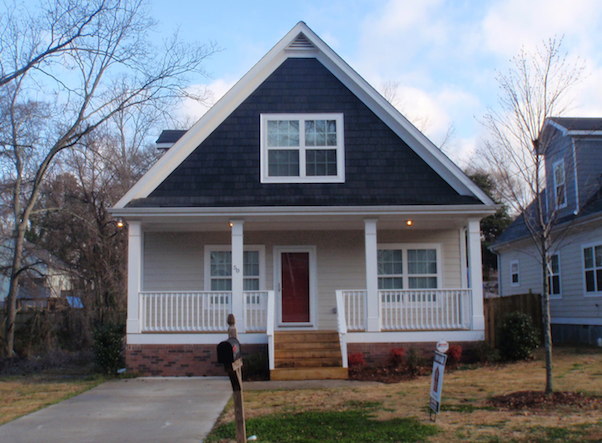
A formerly foreclosed South Atlanta property that Charis purchased and renovated as a workforce (moderately priced) home. The organization aims to help neighborhoods reach a mix of about 30% affordable, 30% workforce, and 30% market rate homes.

In a previous blog, we shared about the beginnings of Charis Community Housing, whose affordable housing work in Atlanta inspired Making Housing Happen. Here, Jim Wehner, Charis’ president, describes some of the ministry’s philosophy and method.

After the completion of the GlenCastle apartments, Charis was invited to take part in the East Lake Community. This affordable housing initiative was spearheaded by Tom Cousins, an Atlanta business leader and philanthropist.

“Tom got the idea to buy and renovate the Bobby Jones golf course, and decided to try housing with this huge asset,” Jim said.

Lower-income residents were able to buy a home in East Lake with the help of “sweat equity.” In this model (similar to that of Habitat for Humanity), future homeowners help build their own homes as part of the purchase agreement.

They also lease for one year and take classes on homeownership before receiving a 20-year, no-interest mortgage loan. Charis has provided hundreds of these loans over the years in East Lake, which is considered its most successful development to date.

Over time, Charis leaders have learned that mixed-income neighborhoods fare better than ones that are mostly low income. “Some call Bob [Lupton] ‘the gentrifier,’” Jim noted, referring to the organization’s founder. “But Charis isn’t afraid to say that community development and revitalization really have an economic component.”

In areas such as South Atlanta, whose population is historically African American and lower income, “gentrification” has a negative connotation. Basically, it means white homeowners moving in, and black renters having to leave because of higher rents.

From their experience, though, Charis believes that “If you really want to move the poverty needle, you need to desegregate,” says Jim. He notes that most Section 8 (federally subsidized) rentals are located in low-income communities.

“Bob recognized early on that you have to mix income levels because when you have people with means, they can help lift the neighborhood along. It’s an economic driver, and lower-income families benefit too.”

Toward that end, Charis aims for a mix of roughly 30% affordable, 30% workforce (moderately priced), and 30% market rate homes. “Each type of home should be spread out evenly in the community and not clumped together,” explains Christy Taylor, Charis’ associate director of community development. This strategy helps combat pockets of poverty in neighborhoods while stabilizing affordability over time.

At the same time, Charis works to maintain affordability with tactics such as:

  • Green housing standards, which help keep utility costs down and offset rising taxes
  • The Homestead Exemption, a state law that lowers the taxable assessed value of an owner-occupied home
  • Ensuring that affordable, moderate, and market-rate homes look similar, without outward signs of price differences

Notes Christy, “All these are creative ways to help keep neighborhoods affordable while counterbalancing the downsides of gentrification.”

What are your thoughts? You can read more about the idea of “gentrification with justice” in these resources:

Intentional Neighboring, Transformed Neighborhoods

28 Mar
Jacklyn Walker and Sebrina Sims (5)

Mrs. Jacklyn Walker (center) with her daughter Sebrina Sims (right), a Charis homeowner, and her granddaughter. Born and raised in South Atlanta, Mrs. Walker has been intentionally neighboring there for many years.


Making Housing Happen exists because of Bob Lupton.

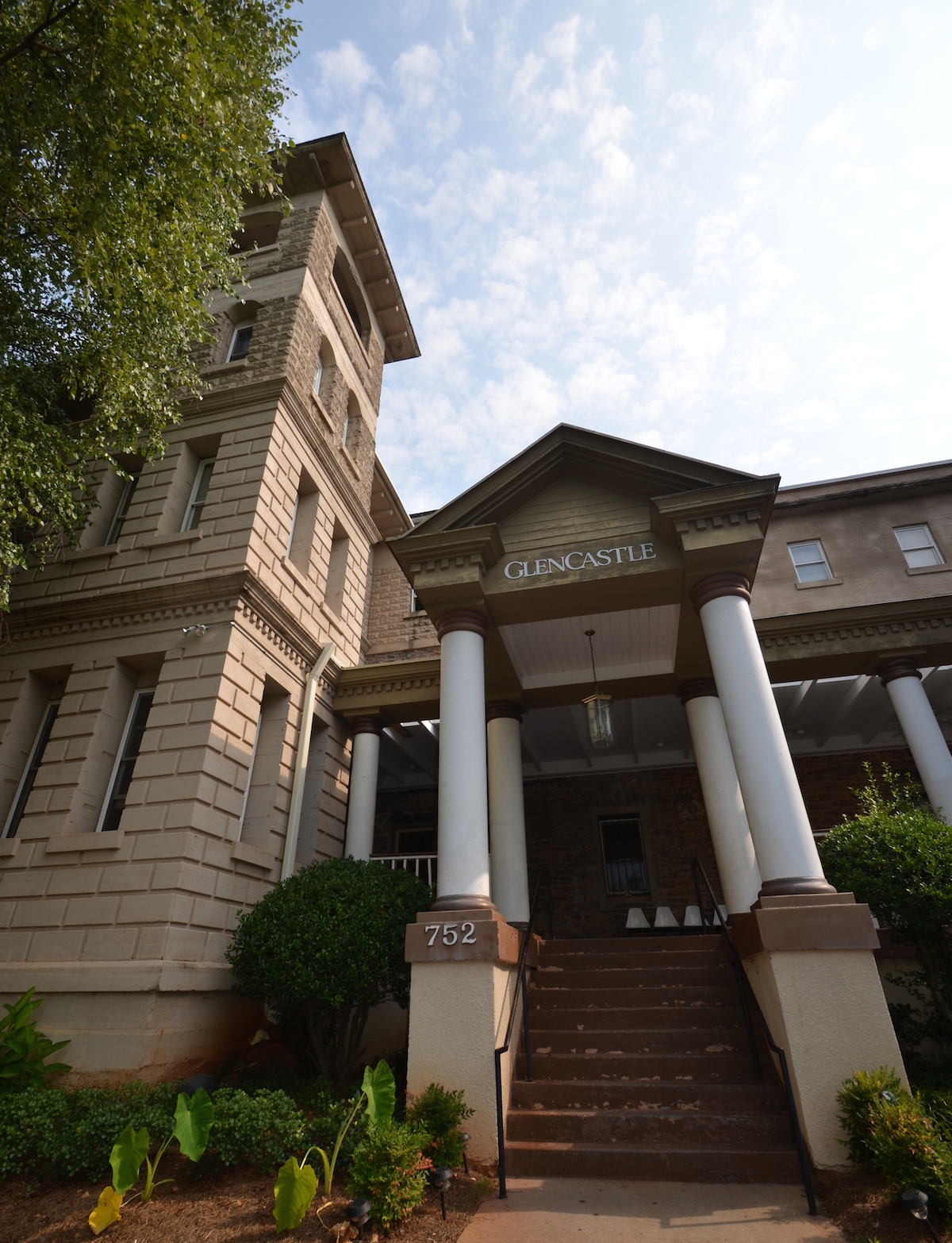
Bob is the founder of FCS Urban Ministries, and I had heard him tell a certain story so many times, I practically had it memorized. It was the story of his role in turning the Atlanta Stockade — formerly a notorious prison – into GlenCastle: 67 beautiful and affordable loft apartments.

Finally, at a Christian Community Development Association conference, I asked Bob if this story had ever been published. He said it hadn’t. “If I put together a book highlighting all the ways that faith-based groups are building affordable housing,” I said, “would you write up this story as a chapter?”

The rest is history, and Bob’s story appears on pages 81-86 of Making Housing Happen – one of many inspiring examples. (You can read an excerpt of the chapter here, or purchase the book here.)

Interior and Exterior (23)

The story of GlenCastle — transformed from a notorious former prison into beautiful apartments — was the inspiration for the book Making Housing Happen: Faith-based Affordable Housing Models.

GlenCastle was just the start of FCS’ housing ministry. Charis Community Housing works hand-in-hand with FCS as part of the organization’s overall community development efforts. According to Jim Wehner, who joined Charis as executive director in 2008, FCS got its start in the Grant Park area of Atlanta. Bob Lupton moved there in the early 1980s, working with young men in the juvenile detention system as part of Youth for Christ.

Relocating into the community and being a friend and mentor, Bob was doing “community development” before it really became a formal practice, Jim notes. “Bob’s work was much more on the ground, and it drew people into the vision.”

Relationships are still at the heart of FCS and Charis, which get to know one neighborhood at a time. Once FCS identifies an area, four to six individuals or families (staff members and community chaplains) are recruited to move into the neighborhood and to look for long-time residents who already are “living with purpose” there.

The FCS families are encouraged to listen and learn from these residents and to join them in intentionally neighboring the community. “Together, they become part of its fabric and work toward strengthening the neighborhood,” explains Christy Taylor, assistant director of community development. Meanwhile, Charis staff work on finding properties that can be transformed into affordable homes, and help residents empower themselves to address challenges.

Part 2 will explain more about how Charis works.

Image

House of Hope Drop in Center and Shelter for homeless youth-12-17 years old

11 Mar

House of Hope Drop in Center for homeless youth-12-17 years old

Pastor Christopher Bourne is pictured second from left, with Darrel Cozen and Norma Pratt (right), both members of the Greater Pasadena Affordable Housing Group.

The House of Hope is the only shelter for youth from 12-17 in the San Gabriel Valley area of Los Angeles. On March 4th, three members of the Greater Pasadena Affordable Housing Group, Norma Pratt, Darrell Cozen and I, visited the House of Hope, sponsored by the Bethlehem Community Development Center. Our district representative from Senator Carol Liu’s office, Adam Carter, also joined the tour.

Christopher Bourne, pastor of the Bethlehem Church of Christ Holiness, at 1550 North Fair Oaks Avenue, in Pasadena, received us with great enthusiasm at 4:45pm on Tuesday, March 5, in the midst of the weekly House of Hope staff meeting.

Along with the shelter, the church and staff run a homeless drop-in center with computers, bus tokens, and all kinds of activities geared toward helping the youth feel loved, welcomed, well fed, and equipped to succeed in school and move forward in their lives.

The church has owned the apartment next door since the 80s. Homeless youth from 12 to 17 years old can stay in two of these very homey apartments for up to 21 days. One apartment houses up to three homeless girls along with a “house mom,” and on the other side of the parking garage, another apartment houses up to three homeless boys with a “house dad.” Those who qualify must not be on probation or in the LA County Department of Children and Family Services (DCFS) system.

The main goal of the House of Hope is not only to provide hope but also reunite the youth with their families when it is safe to do so. Life skills, food, clothing, case management and a loving environment all serve to move the youth closer to reunification.

Of the youth who have come to House of Hope, 85-95% have been reunited with their families. So far the ethnic make-up of those served have been White, Hispanic, and African-American youth.

In one case five kids, ages 9 to 19, were all abandoned due to a parent’s terminal illness. House of Hope staff partnered with other agencies to help those youth who were not within the age range they serve, and they were able to find ways to keep the siblings together. Presently one on those staying at House of Hope is a 15-year-old girl with a baby.

Since opening their doors in October 2012, they have housed 25-30 youth. Girls tend to stay longer. Boys tend to drop in and stay for only a day or two. After youth leave House of Hope, the staff continues to follow up on them for six months.

It seems that a real convergence of money, passion and need coalesced in the birthing of the House of Hope. More than 1.3 million children in the United States are homeless at some time each year. To meet this need in the San Gabriel Valley, three key things came together: the possibility of grant funding; having a location already zoned for a homeless shelter and available space in their church property for a drop in center; and the use of two of their apartments next to the church. All converged with the pastor’s passion.

The staff is reaching out to school districts and cities throughout San Gabriel Valley to let them know about this new and unique resource for homeless youth. Some of these youth have run away to Hollywood, whose arts and street life are a magnet for homeless youth, and staff are targeting that area as well.

If you know of homeless youth please contact House of Hope at 626-794-5216 or info@BCDCHouseofHope.com, or check them out on the web: http://www.BCDCHouseofHope.com.

Tiny Houses Help Address Nation’s Housing Problem

11 Mar

Image

(AP Photo/Carrie Antlfinger)

“MADISON, Wis. (AP) — While tiny houses have been attractive for those wanting to downsize or simplify their lives for financial or environmental reasons, there’s another population benefiting from the small-dwelling movement: the homeless.”–Carrie Antlfinger

Want to learn more? Here is the link to the full article http://bigstory.ap.org/article/tiny-houses-help-address-nations-homeless-problem

Thank you, Mary Girard, for suggesting this article and for the great work that you are doing to provide homes for the homeless.

Link

Making Affordable Housing Flourish through Local, State and National Advocacy

11 Mar

Making Affordable Housing Flourish through Local, State and National Advocacy

This year I hope to do a workshop at the Christian Community Development Association National Conference in Durham, NC, in Sept with Robert Baird and Samuel Gunter–both amazing folks.

Our topic: Making Affordable Housing Flourish through Local, State and National Advocacy. Below are Robert and Samuel’s bios and the description of the workshop we hope will be approved. Can you join us at the  CCDA Conference?

Workshop Description:

“How do we help policies and leaders protect, preserve and add affordable housing stock? How do Moses, Esther, and Jesus help us to understand advocacy?

These questions will be addressed by exploring: a brief survey how US housing policy has both devastated and/or helped our communities; joys and challenges of a ministry’s involvement in advocacy work.

A range of successful approaches and initiatives will be discussed with a more in-depth focus on: No-Net-Loss and Inclusionary Zoning–creating hundreds of affordable units without government funding, using smart growth best practices.”

Presenter bios:

Robert Baird, a community planner advocate, works on land use issues for Community Health Councils, a non-profit community-based policy organization in South Los Angeles.  His work includes efforts at developing healthy food retail in urban food deserts, zoning initiatives that address gentrification and displacement, urban design initiatives to promote health and wellness, and economic development policy in under-invested communities.  He and his wife, Jenny, helped plant New Life Community Church in East Los Angeles.

Samuel Gunter is the Faith Relations Coordinator at Habitat for Humanity of Wake County. He grew up abroad as the child of missionaries, served as a Peace Corps volunteer and an AmeriCorps member, and has worked in churches as well as faith- and issue-based advocacy organizations. He is a graduate of the University of Texas and Duke Divinity School and is married to Isela Gutierrez.

Jill Shook works as a catalyst to transform communities. She is author of Making Housing Happen: Faith-Based Affordable Housing Models, 2012. She earned degrees from Cal Poly San Luis Obispo, Multnomah School of the Bible, Denver Seminary (MA), and Bakke Graduate School (DMin).

Jill has led teams from UC Berkeley and Harvard to developing countries, and has founded STARS, a tutoring program; Pasadena’s Gun Buyback, and gang prevention initiatives. An adjunct lecturer at Azusa Pacific University, Bakke Graduate University, and Denver Seminary, she is married to Anthony Manousos, a Quaker peace activist.

Overcrowding and Housing

9 Mar

When I read this article on overcrowded housing in the Los Angeles Times yesterday, it brought me right back to 1996, when I knocked on perhaps a hundred doors in Northwest Pasadena to invite children to join our vacation Bible school.

To have a conversation, I would often sit on the bottom bed of a set of bunk sleepers, while other families members did the same.  All of us crooking our necks so as not to hit our heads on the bunk above. No space for a couch or even in some cases for a table and chairs. One home I visited had 10 families.

Later, for my doctoral work I interviewed seven gang kids, seeking to discern why they entered gangs. Overcrowding was one of the issues; kids often found their sense of place in the streets.

Segregated housing and students being placed in special education were some of the other reasons, which challenged my assumptions. I had thought the core issue had more to do with family issues. What do you think? Jill Shook http://www.latimes.com/local/la-me-crowding-20140308,0,6827011.story#axzz2vUJWN1Hf