Archive by Author

Making Housing Happen book review in Friends Journal

6 Feb

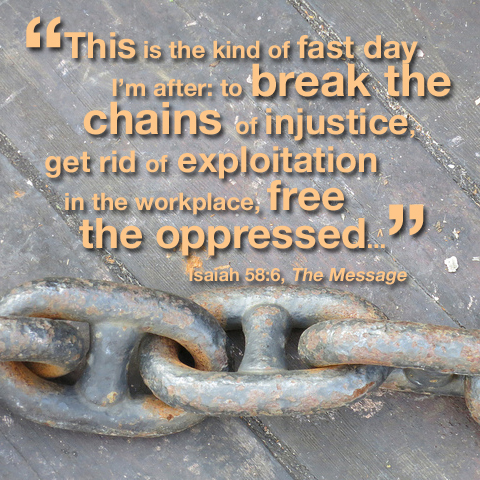
"This is the kind of fast day I'm after: to break the chains of injustice, get rid of exploitation in the workplace, free the oppressed..." --Isaiah 58:6I was excited to have Making Housing Happen reviewed in the January issue of Friends Journal. Published by Friends Publishing Corporation, the journal serves the Quaker and wider communities through “articles, poetry, letters, art, and news that convey the contemporary experience of Friends.”

The book reviewer is Diane Randall, former executive director of the Partnership for Strong Communities, a Connecticut-based nonprofit focusing on affordable and supportive housing. Diane, who is now executive secretary of the Friends Committee on National Legislation, writes:

How do people get caught up in the issue of affordable housing? Some do because they are poor and in need of a home that is safe and affordable, some because they see economic and environmental injustice played out in poor neighborhoods, and they are called to address it.

In the second edition of Making Housing Happen: Faith-Based Affordable Housing Models, editor Jill Suzanne Shook addresses reasons why people of faith engage in the long-term commitment to create affordable housing that builds stronger communities. This book will resonate with those of us who have sought to justify zoning laws for housing density that make homes more affordable, those who have lobbied for independent apartments for people who have been chronically homeless, or those who have used any other approach that allows people to have a place to call home. Builders who have volunteered sweat equity on projects for first-time homeowners will also be interested….

You can read the full review on the Friends Journal website.

Photo: cc by Matti Mattila

Image

Natalie Brown, 11, speaking at the Pasadena City Council, Monday, Feb. 3, 2014

5 Feb

Natalie Brown, 11, speaking at the Pasadena City Council, Monday, Feb. 3, 2014

Good evening. My name is Natalie Brown, I am 11 years old and in the sixth grade. I am grateful to be one of the winners of the Martin Luther King Jr. essay contest of 2014. I am thrilled to be here tonight because my essay was about housing and homelessness.

My family attends church in Pasadena and I go to school in Sierra Madre. My dad, who is a doctor, would volunteer his services for Elizabeth House and Door of Hope residents. One day I was in the car with my mom waiting for the light to turn green at Michillinda and Foothill Blvd. I saw a young man that was dirty, thin, had dark hair and somewhat dark skin. He was standing on the middle island, holding a sign, and he looked hungry. I thought, why is he here, he is too young to be here. We saw him there more than just that day and each time we drove past my heart sank. We would be listening to happy music and then we would see him and each time my heart felt heavy.

I do not want to be remembered as a person who did nothing in this world. I want to make a positive impact in the community. In my essay I acknowledged that Dr. King gave his life to help people. I too would like to dedicate my life to those in need. I would like my legacy to be that I helped extinguish the quick spreading flames of homelessness.

Homelessness is such a hard and painful tragedy. There are mental illnesses and financial problems that can easily cause people to lose their homes and not be able to buy food. It makes me feel such sadness to see homeless people of any age. I want to help in the fight against homelessness.

A big step is to provide housing to homeless families. There are already places in Pasadena that house these families, but we need more. By giving people a home it gives them shelter while they can receive job training and education. The hope is they can soon afford their own homes.

After I won the MLK essay one of my teachers sent me an article on the homelessness fight in Utah. Utah has reduced homelessness by 78% just by giving people homes! They have done this under Utah’s Housing First program. Their goal in a few years would to have 100% of the homeless people in homes. This gives us great hope! To do this here we need a Housing Commission to move forward to provide adequate and affordable housing for all in need and to be an example and even partner with Sierra Madre where I to school and Monrovia where I live.

I believe that, with God’s help, all things are possible and anyone can help change the lives of those in need…even a young girl like me. This is the prize money I won in the essay contest. It is $250. I know it is difficult to find the money to fund the Housing Commission, so I would like to donate my prize money to the Housing Commission. I hope it will help in getting it started.
Thank you very much.

Saving Public Housing?

30 Jan

My friend Diane Miller, who just finished reading my book, made some nice comments. “I just finished reading MHH and was so encouraged by it. I love all of the tangible examples of what people are doing around the country.” I’m quite impressed with Diane’s efforts to save some public housing in Chicago. See the link below for more information about the work that she is doing.

http://www.aljazeera.com/indepth/features/2014/01/us-housing-policy-debate-rages-chicago-2014116616144124.html

With changing national policy, many public housing developments have been torn down.This is a good thing, but it has many unintended consequences of displacing residents. The HOPE VI funding is creating wonderful mixed income communities, but many of us feel that there is a need to retain some public housing. What do you think?

MLK, Housing, and Civil Rights

23 Jan

cc-by-tychayWe are here today because we are tired. We are tired of being seared in the flames of withering injustice. We are tired of paying more for less. We are tired of living in rat-infested slums and in the Chicago Housing Authority’s cement reservations.

–Dr. Martin Luther King, Jr.

In celebrating Dr. Martin Luther King, Jr. this week, one aspect of his legacy that has sometimes been overshadowed was his advocacy for affordable housing. But as Terri Ludwig points out, ending discrimination in housing and ensuring decent, low-cost housing for all was inseparable from Dr. King’s overall mission.

Terri is president and CEO of Enterprise Community Partners, Inc., a national nonprofit that provides capital and knowledge to create affordable homes. In “MLK’s Housing Legacy,” she writes, his July 1966 speech at the Chicago Freedom Movement launched a housing movement in the city that quickly gained results:

In August 1966, activists and city officials reached a “summit agreement,” through which the local housing authority promised to build more public housing and the Mortgage Bankers Association agreed to enact certain anti-discrimination rules. … After signing the Chicago summit agreement, Dr. King called it “the first step in a thousand-mile journey.”

Ultimately, Dr. King’s efforts would culminate in the signing of Title VIII of the Civil Rights Act of 1968 — the Fair Housing Act, banning discrimination in home sales and rentals. In signing the law, President Lyndon Johnson credited Dr. King’s vision and advocacy for contributing to its passage – which, sadly, happened a week after his tragic death.

You can read the full article on the Huffington Post.

Photo: cc by tychay

Image

Former President Carter comments on affordable housing need

8 Oct

Former President Carter comments on affordable housing need

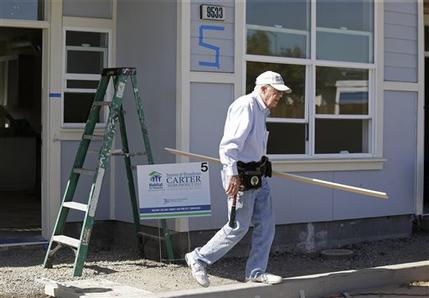
In this article from the Associated Press Former President Jimmy Carter gives his take on the need for more affordable housing. He addresses how even the middle class has been affected by the recent economic downturn. It seems to me that he got it right. Take a look and let me know what you think!

http://hosted.ap.org/dynamic/stories/U/US_JIMMY_CARTER_HABITAT?SITE=AP&SECTION=HOME&TEMPLATE=DEFAULT

Turning a military base into affordable housing here in Pasadena: how Jill and other housing advocates made this possible

17 Jun

Feb 4, 07 Habitat win-03 edited June 14-13Several weeks ago, we were invited by Habitat Board member Herb Rim to a gala fundraising event at the Pasadena University Women’s Club put on by Habitat for Humanity of San Gabriel Valley. Habitat is building 9 homes in a former military base called the Desiderio Army Reserve Center and needs to raise $2,889,142 to complete this project.

We were excited to be part of this event since Jill played a significant role in making this project possible. Jill and Herb discussed ways to involve the religious community in the new Habitat project, which makes sense, since this project was likely approved due to the strong support of support of churches.

When the Desiderio Reserve Center was about to close, developers wanted to exploit this prime piece of real estate for profit, but Jill and other housing justice advocates saw “a golden opportunity to create affordable housing.”  They knew that the “Stewart B. McKinney Homeless Assistance Act. . . made serving the homeless the first priority for use of all surplus Federal properties, including military installations.”

Even though the law was clear, it took a tremendous amount of work and community organizing to convince the city to follow the law and make sure some aspect of it was set aside for homeless Vets. This did happen, but in a different site, making it then possible for the 9 units proposed by Habitat for Humanity become approved. This story is told in Jill’s book “Making Housing Happen.”

Dire effects of sequestration on affordable housing for the poor

4 Apr

When I came back from a meeting of the Pasadena Housing Department this morning and told my husband how sequestration would affect low-income folk, he became so concerned he wrote this article which we are sending to the local newspapers and which he had posted on his blog (laquaker.blogspot.com).  I hope this article will inspire you and others to take some action.

Sequestration–the budget slashing measure that took place because Congress  was unwilling to deal intelligently with our fiscal crisis–is having a huge  impact on homelessness here in Pasadena and throughout the USA.

 Myrtle Dunson, Housing Manager for the city of Pasadena, reported that  sequestration  requires that the number of Section 8 housing vouchers in  the city be cut from 1,406 to around 50-75 as of April 1. Yes, that’s a cut of over 95%!!
 
These  vouchers are what enable low-income people to afford housing. Many of those  receiving Section 8 assistance could end up homeless.
 
Nan Roman, President of the National Alliance to End Homelessness,  puts Pasadena’s housing crisis into a national perspective:

“It is estimated that over 125,000 families and individuals – more than  half of whom are elderly and disabled – may lose their housing through the cuts  to the housing assistance programs. Some 100,000 people will be affected by the  cuts to homeless assistance. While some programs that aid poor people are exempt  from sequestration, these efforts to meet the basic needs of the poorest people  are not.”

Housing is a basic human need. Depriving low-income folks of housing  will have dire consequences.

According to the most recent homeless count, Pasadena has 772  homeless persons, a 15% decrease thanks in part to Housing Works, an  organization that houses the chronically and at-risk homeless, thereby saving  the city money (since this population tends to need services such as  hospitalization, etc.). This highly successful program will  suffer cuts up to 5.9% due to sequestration. (See http://www.housingworks.org/advocate/detail/a-scary-bedtime-story-the-sequestration-explained/0

According to the most recent homeless count, 560 Pasadenans are  homeless and unsheltered, including 39 homeless veterans and 33 families with a  total of 59 children.

Non-profits and churches are working tirelessly to address this crisis. Friends  Indeed (formerly known as ECPAC), Union Station, and other groups work together  to provide services for Pasadena’s homeless population. Family Promise, a  national organization with a new branch focusing on the San Gabriel Valley,  involves congregations in providing services that help homeless families find  jobs and housing. Three Pasadena churches–Friendship Baptist, Hollinston  Community Church, and Onevoice Free Methodist Church–are part of this  highly effective program.

More than just emergency services are needed, however, especially as our  homeless population grows older (see “Aging  into homelessness: Experts say more seniors will be on the streets if more  isn’t done to increase housing opportunities” by Rebecca Zukins 4/4/13). http://www.pasadenaweekly.com/cms/story/detail/aging_into_homelessness/12018/

According to the US Council of Mayors, “lack of affordable housing” is one  of the primary causes of homelessness. That’s why we need to make a  serious commitment to create more affordable housing by supporting the  California Homes and Jobs Act of 2013 (SB 391). This act will:

  • Create 29,000 jobs annually, primarily in the beleaguered construction  sector.
  • Help businesses attract and retain the talent that fuels California’s  economy.
  • Generate an estimated $500 million in state investment and leverage an  additional $2.78 billion in federal, local, and private investment.
  • Deploy these dollars throughout California using a successful private/public  partnership model, creating jobs and generating revenue for local governments.
  • Build safe and affordable apartments and single-family homes for  Californians in need, including families, seniors, veterans, people with  disabilities, and people experiencing homelessness.

As people of faith, we have a special responsibility to make sure that our neighbors don’t end up living on the street, even if it means making sacrifices,  such as somewhat higher taxes.

According to the Book of Acts, Christians cared more about the  poor than about home ownership:

“There were no needy  persons among [early Christians]. For from time to time those who owned land or  houses sold them, brought the money from the sales and distributed it among the  needy.” (Act 4:34).

If the wealthy and privileged of America paid their fair  share of taxes (at least as much as middle class people do), and if the middle  class chipped in, we could end homelessness in America. Si, se  puede!

Investors are making homes unaffordable…

19 Feb

I found the article below in the LA Times on Sunday fascinating, expecially since I had just met with a pastor planning to retire in the Inland Empire and he’s out bid by investors on every home he’s seeks to buy. I have spoken about Landlord Liscensing as one way to put some limits on this practice. My chapter on “Ownership, Land and Jubilee Justice” speaks of limits God places on the days we work, the years the land “works” and the a limit on speculation (Lev. 25).. Since investors have the advantage with all cash deals to avoid mortages, apprasals, and private mortgage insurance, in exchange do you think there should be  a limit to the number of homes an investor can buy to let’s say–20? 30? 90?? With these advantages, do you think that an investor should have a responsibity to set aside a percent of the homes as affordable and/or available to be sold to the public?   Read the article and let me know what you think….. Thanks! Jill

http://www.latimes.com/business/la-fi-inland-empire-recovery-20130217,0,5814396.story

Steve Scauzillo: “Pasadenan Builds Housing from Scripture” and promotes today’s book signing at Archives

9 Feb

 I was pleased and grateful that Steve Scauzillo wrote this piece for the Pasadena Star News about my book and ministry. I hope that you can make it to my book signing today at 4:00 PM at Archives, 396 E Washington Blvd, Pasadena, CA.

http://wordpress.com/#!/read/following/

Steve Scauzillo: Pasadenan builds housing from scripture

Posted: 02/08/2013 03:08:30 PM PST

February 8, 2013 11:21 PM GMTUpdated: 02/08/2013 03:19:59 PM PST

AS a journalist, I’m not always free to present solutions. We abide by the code “just the facts, ma’am” and then we’re off to the next story.

In opinion, however, facts can combine with advocacy. I can talk about a problem and say what I think can solve it.

No one does this better than my friend Jill Shook, whose book “Making Housing Happen” speaks of loving thy neighbor as a framework for solving the country’s housing crisis. But more than rhetoric, Shook puts up the drywall and nails the roof shingles using examples from Atlanta to New York, from Chicago to Pasadena.

In the introduction, Shook writes: “`Making Housing Happen’ illustrates in concrete ways how congregations and faith-based groups developed affordable housing in their communities.”

Full disclosure: Jill and I volunteered together in the 1990s and early 2000s to form Lake Avenue Church’s Community Outreach Team. We worked on loving the poor, from those with AIDs to the homeless to the hungry. Shook is also a member of the church I attend now, One Voice Church, also in Pasadena.

I’ve heard a lot of rhetoric and biblical philosophy in my day, but rarely do I hear someone mix the Bible’s words with action the way Shook’s done in her life and in her book.

“The first argument in the Bible between Abraham and Lot was about land. The first five books of the Old Testament are about preparing to go into the Promised Land,” Shook explained at a recent packed gathering at Vroman’s Bookstore in Pasadena.

The Old Testament philosophy of resting on the seventh day, resting the land in the seventh year and starting over on the 50th year (Jubilee) lays the foundation for faith- based groups of today to reclaim burned out and boarded up neighborhoods.

The prophets would lament the breaking of these land laws, Shook said, mostly because people became greedy and forgot the poor.

Lee Stuart and John Heinemeier wrote a chapter in her book about the Nehemiah Strategy, based on the prophet’s call for unity and face-to- face meetings.

About 30 churches from the South Bronx convinced government agencies to give them the blighted land and they turned them into viable affordable housing.

“They said we have resources. We have burned-out houses. But we have the land. And we don’t want outsiders to define us,” Shook said.

In Hawaii, churches demanded banks give homeowners facing foreclosure face-to-face meetings. Hawaii made it law. “That cut the foreclosure rate in half,” Shook said.

Sometimes, the people can do it without the government. Sometimes, the people can influence government policies.

In Pasadena, Shook helped shape the city’s inclusionary-housing law, which says a developer must set aside 15 percent of the units for low- and moderate-income residents.

I’ll close with this example.

Shook read about a housing development called Westgate in our paper. She called the developer and he said he would build some units at the “moderate-income” level. She said she would bring churches and advocacy groups in support but only if they lowered the threshold.

“Two weeks later, I get a call. He decided to go up to 20 percent of all units and said they would all be very low-income,” Shook remembered.

About 97 units were offered for about $500 a month to those who couldn’t afford Southern California’s high housing prices.

The idea is to get at the foundation of poverty. Finding people housing and employment. Somehow, with the mortgage meltdown of 2008, we’ve gone backward. Shook points to the Book of Acts in the New Testament, where the early church practiced God’s principals for housing, land and loving thy neighbor.

“It says in Acts 4: `There was no poor among them,”‘ she said.

Shook and friend Bert Newton (“Subversive Wisdom,” WIPF & Stock, 2012) will sign their books at 4 p.m. Saturday at Archives book store, 396 E. Washington Blvd., Pasadena.

steve.scauzillo@sgvn.com

626-544-0843

 http://www.pasadenastarnews.com/opinions/ci_22551283/steve-scauzillo-pasadenan-builds-housing-from-scripture#ixzz2KPvh2EGW


http://www.pasadenastarnews.com/opinions/ci_22551283/steve-scauzillo-pasadenan-builds-housing-from-scripture
 

Book Signing at Archives Bookshop

3 Feb

archives_email_updated

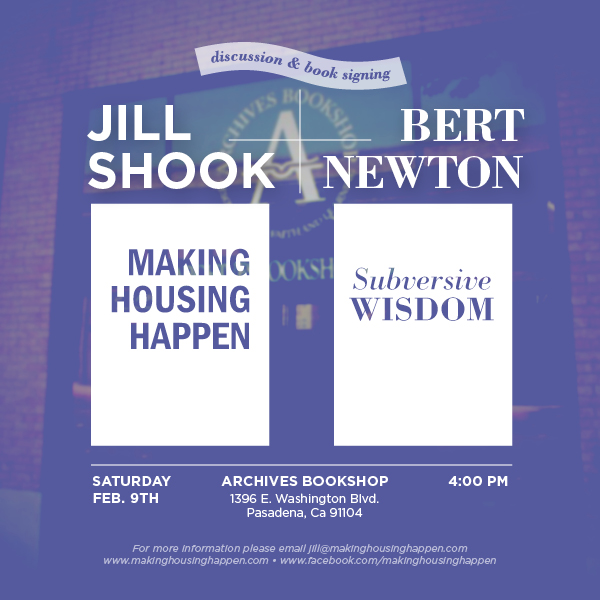
Miss out on Jill’s book talk at Vroman’s? Jill Shook and author Bert Newton will be sharing again about their recently released books this Saturday at Archives Bookshop in Pasadena. Don’t miss out!

Archives Bookshop
369 East Washington Blvd.
Pasadena, CA 91104
Saturday, February 9th at 4pm