

Check out more photos on our Facebook page!

Take advantage of California’s $2 Billion Keep Your Home California Program for homeowners! I just heard about this AWESOME resource through Korean Churches for Community Development (KCCD) along with Hyepin Im also featured in my book Making Housing Happen.
Keep Your Home California (KYHC) is the state’s $2 billion foreclosure prevention effort, established under the U.S. Treasury’s Hardest Hit Fund. There are four programs, with three aimed to prevent avoidable foreclosures by offering mortgage payment assistance to qualifying low- and moderate-income homeowners who are facing a financial hardship. Keep Your Home California’s four programs are the Unemployment Mortgage Assistance, the Mortgage Reinstatement Assistance, Principal Reduction and the Transition Assistance Program.
KCCD is a HUD-approved housing counseling agency for the KYHC Program. KCCD’s counselors will assist you in determining if you are eligible and provide counseling to begin applying for the KYHC Program.

Landlord Licensing: All businesses are must have a license, except for landlords. Investors can go into a community, buy up homes in bulk and change the character of a neighborhood from an owner-occupied community to renter occupied. Cities can have some control over this by requiring that any home that is rented be licensed. Additional rental conversion fees can also be used (like in Minneapolis). This can be coupled with notifications to the neighborhood when a home is moved from owner occupied to rental. This policy gives cities a tool to enforce codes, deal with problem properties, add money to affordable housing trusts and have an idea of their housing stock. Cities like Irvine, CA have set goals to make 10% of thier housing stock affordable. How can you set goals if you don’t know what you have? An article from Shelterforce Magazine gives a long list of incentives for landlords to do this tells how this has been successfully been done in cities. See: http://www.shelterforce.org/article/2071/the_great_american_fire_sale/P2/ I love to know what you think of this idea and if you know of other cities where this has been implimented and is working well.

A little known law called the Stewart B. McKinney Homeless Assistance Act, passed in 1987, requires that priority be given be the needs of homeless vets when army bases are closed down. When the Desiderio Army Reserve Center was closed in Pasadena, many of us affordable housing advocates cited this law to convince the city to build low-income, affordable housing on this site. Some people in the city resisted, but eventually Habitat was given permisssion to use ths property.
 Fast forward several years, and this project is now on a “fast track,” as noted in the link below. I had the joy of helping to organize the community to get these units approved several years ago and write about this process in my book. There I talk about the struggles we had over whether this property should be for higher density, previously homeless renters or Habitat for Humanity homes. Given the fact this was a high-end neighborhood, located right under the famous Colorado St bridge, we decided to compromise and supported Habitat.
Have any of you had experiences like this in helping to transform a former military base into affordable housing? Or do you know of such cases?
To find out more, check out Janette WIliams’ article:

While my husband was recently in Washington, DC, with 325 Quakers petitioning our government to cut the military budget and devote more funds to social programs (see http://laquaker.blogspot.com/2012/11/quakers-go-to-washington-to-call-for.html), I went with my fellow housing advocates to the Pasadena Planning Commission to make sure that the voices of the poor are heard, and the concerns of ALL Pasadenans are addressed, when it comes to the most basic human need: housing. We return on Wednesday of this week to see if they will use the language we have proposed.
Here’s a letter we wrote to the Planning Commission to encourage our city officials to include all income levels in the 8 principles that will guide Pasadena for the next 10 years. In this letter you will find some excellent proposals for creating affordable housing here in Pasadena and elsewhere. (Also, for more about affordable housing, check out my new revised book here.)
Nov. 19, 2012
Dear Planning Commissioners,
We are advocates from the Affordable Housing Services, All Saints members, Door of Hope, ECPAC—the Ecumenical Council for Pasadena Area Congregations, the Elizabeth House, Family Promise, Interdenominational Alliance, Pasadena Jewish Temple & Center, the Mennonite Church, Pacific Clinics, Unite Here and the Urban Village. We would like to take the opportunity to thank you for the work you continue to do to discern the wise use of our city’s land, and the time you have given to update the general plan. We also thank you for encouraging Michelle White last month to consider how the 8 Guiding Principles could have language that would include housing for all income levels within our city.
The issue of affordable housing is one of great consideration and consequence to those who live and work in the city of Pasadena. We are aware that the 20,000 residents of our city are spending more than they can afford on housing costs (The federal standard is that households should not spend more than a third of our income on housing costs) An additional grievance is that a number of those who can’t afford housing work for the City of Pasadena and even grew up here, but can no longer afford to live here.
What we currently know:
· Those we serve in the various non-profits we represent would become stable, contributing citizens of our community if they could afford to live in Pasadena. Where they work and close to family and their houses of worship—their meaningful support systems.
· Pasadena has a huge disparity in income. Supporting high-end restaurants, hotels and amenities, beautiful lawns, clean homes, and dry-cleaned clothes requires a vast workforce. They deserve to live in the city where they serve.
· Commuting creates traffic—one of the biggest issues we hear about. If you ask most people why they live where they do, they will tell you it’s because of affordability. A great example is Portland, Oregon, which has made 50% of the housing in the downtown area affordable, resulting not only in lowered traffic, but a lower carbon footprint.
· Pasadena is a world-class city and we demonstrate an example to our region, state and nation. We need to make sure that this example is inclusive with a diverse range of socio-economic backgrounds and ethnicities. This is what makes for a rich experience in our great city. We have a history as a mixed-income community with the wide streets with large home and maids quarters, and back houses, and narrow streets with smaller homes. This mixed income heritage must be preserved.
Yet, we are losing affordable housing faster than we are building it. We MUST preserve this essential precious resource and continue to create policies that will both preserve as well as support new affordable units. There are many ways that we can do this while creating a win-win for developers, landlords and more. For example:
1. Create a Community Land Trust like that of the South LA Trust. This Trust is addressing the mass displacement of community residents around USC; all the units built on the on Trust land remain permanently affordable—no ending of HUD Contacts (typically 20-45 years) and affordability covenants which has secured in places like Castle Green ( that need to be paid by the city each time they expire). A Community Land Trust is similar to our Inclusionary housing ordinance in Pasadena which is permanently affordable, any land banking the city may land bank could be placed in a trust. The California Community Foundation has an LA County wide trust that the city could partner with. Over 200 cities in the US are helping to create or partnering with Community Land Trusts.
2. Work with the state to adjust how tax credits are utilized, in a way that landlords who are already making their units affordable are rewarded. Tax Credits could help them improve their properties while retaining affordability. This could also enable them to gain access to greening their apartments to address environmental concerns.
3. Legalize second units. Like Sierra Madre, Culver City and Santa Cruz, work with landlords with illegal second units to help them become legal in exchange for affordability covenants. Additionally, allow new units on properties less than 15,000 square feet.
4. Strengthen our Inclusionary Housing Ordinance. Raise levels so that around transportation corridors the percentage is 20% or 25%; additionally lower the car spaces needed as close-by public transportation will help make up for this. (Parking is now of the most expensive parts of any housing).
5. Find ways to fully fund our Affordable Housing Trust Fund. Create impact fees, recordation fees and other means to fund the City’s Affordable Housing Trust Fund.
The list can go on and on. These are not impossible ideas. We need to see possibilities and create guiding principles for our general plan that will support these kinds of visionary attainable goals over the next ten years.
The Greater Pasadena Affordable Housing Group has taken the challenge of Richard Norton to find language that would better express the importance of affordable housing for all residents, not just for the labor force as it is now stated within the concept of social equity. That is one step in the right direction, but is too limiting. We also took the liberty to adjust the language to make the guiding principles more culturally and ethnically inclusive.
We need to consider all Pasadena residents, particularly seniors and the disabled, like those who were unprotected when they were unlawfully evicted from Pasadena Manor. When these matters are properly addressed, only then will we move toward true social equity in Pasadena.
Please carefully look over the work we have done and consider our recommendations. We appreciate your important role in shaping our great city’s future, and we thank you for the challenge and opportunity to participate in this with you.
We look forward to attending the next planning session on Nov. 28th after you have reviewed our suggested changes. We are eager to hear what you think, talk on the phone or meet in person if you have any questions.
Regards,
The Greater Pasadena Affordable Housing Group
Contact: Michelle White (626) 296-3100 or Jill Shook at (626) 675-1316
If you wish to see the language we proposed send me an email at jill@makinghousinghappen.com

 1. Many who are struggling to pay their rent or mortgage ask: does any real affordable housing exist?
The housing crisis today is still very serious, rentals are high, and it is hard for many low-income people to obtain loans to purchase homes, but there is good news nonetheless. Despite this bleak economic climate, churches and faith groups are figuring out how to create beautiful, environmentally-wise, affordable housing that is transforming lives and communities. The stories are so inspiring that they begged to be written.
2. As the editor of Making Housing Happen, how did you become involved in affordable housing?
While I was directing STARS, an after school program I had the joy of helping to found at Lake Avenue Church in Pasadena, I went into the homes of countless families and consistently witnessed 2-3 families squeezed into a one or two bedroom apartment, parents working long hours at low-wage jobs and youth dropping out of school to work, in order to help make ends meet. When I helped families move into a faith-based affordable housing complex, parents began to live within their means, had time for their children, and their children were graduating. That sold me on the value of faith-based affordable housing. I have a second reason I’d like to share. I intentionally moved into a low-income community of color, which I absolutely love. But as I improved my property and other white folks like myself moved in, many of my lower income neighbors, including people of color, could no longer afford to stay. I became part of the problem. The only way I know how to retain a mixed-income community is to make housing affordable or to increase wages. God put in me a passion to focus on affordable housing.
3. You feature a broad array of authors who tell their God-sized stories of making housing happen, how did compile such a work?
While attending the Christian Community Development Association’s annual conference, I asked Bob Lupton if his famous story of turning a horrible prison into beautiful affordable housing had been written. He said it hadn’t. When I told him I was thinking of compiling a book of inspiring faith based affordable housing stories, Bob wrote up his story and sent it me two weeks later! With a contribution from someone like Bob, known for developing mixed income communities, other authors were inspired to also contribute chapters.
4. What is your favorite story in the book?
I love them all—otherwise I wouldn’t have featured them—but the chapter that impresses me the most is the one about Nehemiah Homes in South Bronx. I still can’t get over how 60 congregations built over 5,000 homes—infusing low income homeowners into Brooklyn and South Bronx, communities where no one would invest–and then succeeded in transforming the people, the churches and the whole community—with less than a 1% foreclosure rate. But the model I feel most drawn to is the community land trust (CLT)—whereby homes are sold, but the land is kept in a trust to create a permanent source of affordability. This is brilliant, a deeply biblical strategy and it works. I believe this and variations on this model could be a large part the solution to our housing crisis today; and hundreds of cities across the US are figuring this out.
5. You have effectively compiled inspiring stories of others creating affordable housing. Have you also been involved in making housing happen?
I have become passionate about the importance of housing and land use policies. For example, here in Pasadena I was part of team to craft our local inclusionary housing policy—whereby any housing development that is 10 units or more in size must set aside 15% of the units as affordable. Since then, I have had the joy bringing pastors and parishioners out to help developers gain needed approvals –if they include units for the low- and very-low income. You will read of this and my other housing escapades in this book.
6. What are the biggest challenges you see today that are preventing affordable housing from happening?
Many would point to national priorities, allocation of funds, access to resources, or specifically to predatory and greedy banking practices, while others point to the excess of or lack of government investment or regulation. Still others would say the poor just don’t stand a chance today as they are the small Davids facing the Goliath of big investors, big banks and big corporations. All of this is true, but I am convinced that the church has the power and the imagination to change all of this. When people of faith and the poor are organized and a voice is given to the voiceless, and their stories of pain are consistently told to those with the power to do something about it, redemption for both the powerful and seemingly powerless takes place. When this kind of ministry takes place the kingdom of God is present, housing again happens, and the angels rejoice to see that there is room in the inn. You will read of such stories of struggle and hope in Making Housing Happen.
To order a copy, please visit Wipf and Stock Publishers.
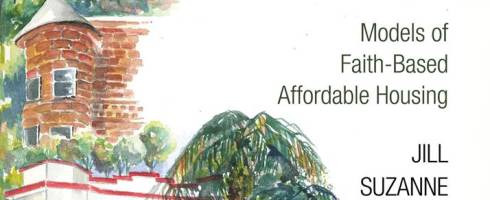
The growing housing crisis cries out for solutions that work. As many as 3.5 million Americans experience homelessness each year, half of them women and children. One in four renters spends more than half of their income on rent and utilities (more than 30 percent is considered unaffordable). With record foreclosures and 28 percent of homes “underwater,” middle- and low-income homeowners are suffering. Many congregations want to address this daunting problem yet feel powerless and uncertain about what to do. The good news is that churches are effectively addressing the housing crisis from Washington State to New York City—where an alliance of sixty churches has built five thousand homes for low-income homeowners, with virtually no government funding or foreclosures.
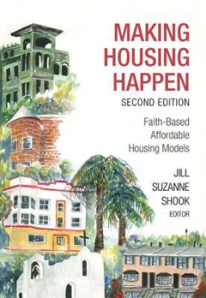 This book not only presents solid theological thinking about housing, but also offers workable solutions to the current crisis: true stories by those who have made housing happen. Each story features a different Christian denomination, geographic area, and model: adaptive reuse, cohousing, cooperative housing, mixed-income, mixed-use, inclusionary zoning, second units, community land trusts, sweat equity, and more.
Making Housing Happen is about vision and faith, relationships, and persistence. Its remarkable stories will inspire and challenge you to action. This new edition includes significant new material, especially in light of the ongoing mortgage crisis.
Order your copy here.




 Making Housing and Community Happen