Tag Archives: affordable housing

Intentional Neighboring, Transformed Neighborhoods

28 Mar
Jacklyn Walker and Sebrina Sims (5)

Mrs. Jacklyn Walker (center) with her daughter Sebrina Sims (right), a Charis homeowner, and her granddaughter. Born and raised in South Atlanta, Mrs. Walker has been intentionally neighboring there for many years.


Making Housing Happen exists because of Bob Lupton.

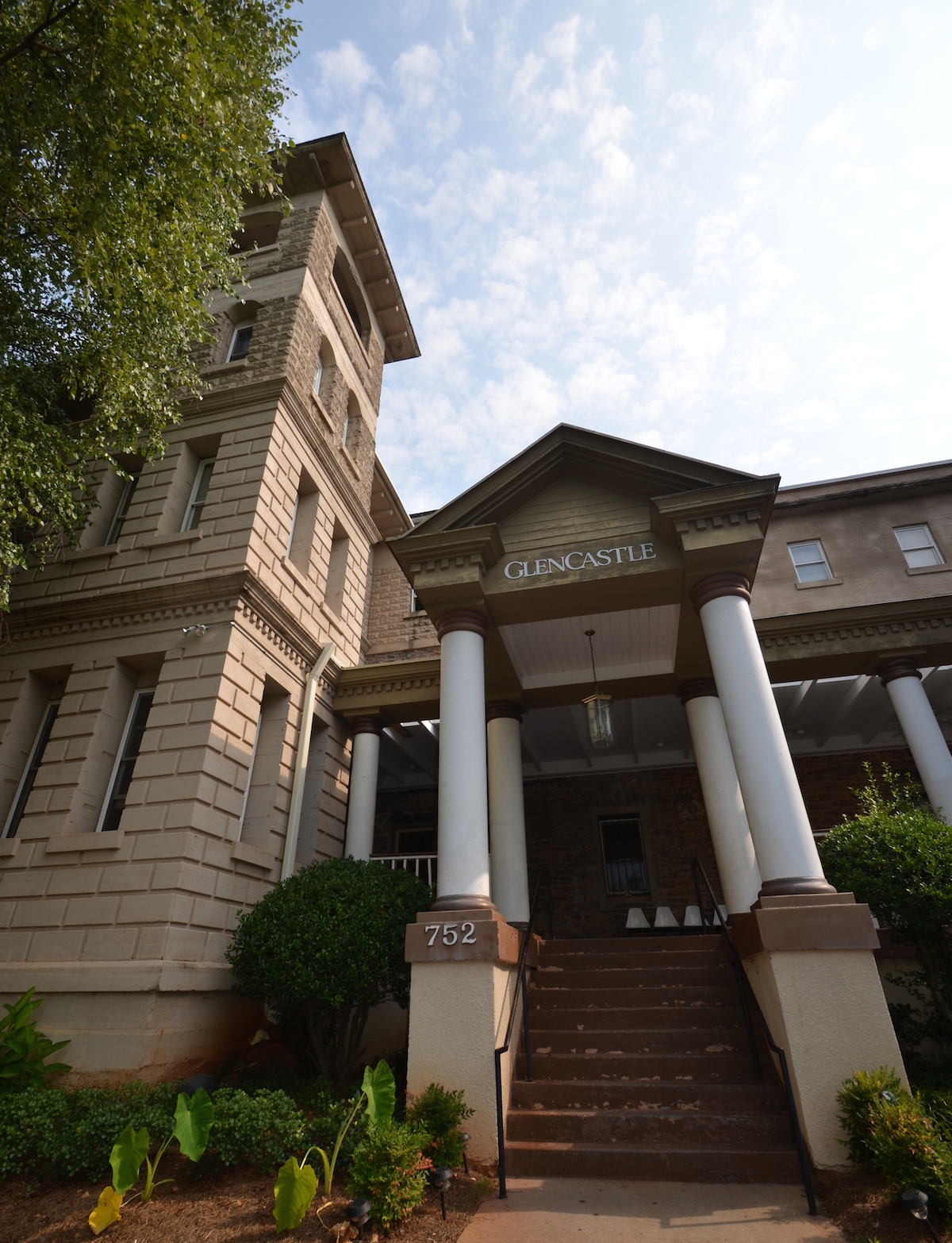
Bob is the founder of FCS Urban Ministries, and I had heard him tell a certain story so many times, I practically had it memorized. It was the story of his role in turning the Atlanta Stockade — formerly a notorious prison – into GlenCastle: 67 beautiful and affordable loft apartments.

Finally, at a Christian Community Development Association conference, I asked Bob if this story had ever been published. He said it hadn’t. “If I put together a book highlighting all the ways that faith-based groups are building affordable housing,” I said, “would you write up this story as a chapter?”

The rest is history, and Bob’s story appears on pages 81-86 of Making Housing Happen – one of many inspiring examples. (You can read an excerpt of the chapter here, or purchase the book here.)
Interior and Exterior (23)

The story of GlenCastle — transformed from a notorious former prison into beautiful apartments — was the inspiration for the book Making Housing Happen: Faith-based Affordable Housing Models.

GlenCastle was just the start of FCS’ housing ministry. Charis Community Housing works hand-in-hand with FCS as part of the organization’s overall community development efforts. According to Jim Wehner, who joined Charis as executive director in 2008, FCS got its start in the Grant Park area of Atlanta. Bob Lupton moved there in the early 1980s, working with young men in the juvenile detention system as part of Youth for Christ.

Relocating into the community and being a friend and mentor, Bob was doing “community development” before it really became a formal practice, Jim notes. “Bob’s work was much more on the ground, and it drew people into the vision.”

Relationships are still at the heart of FCS and Charis, which get to know one neighborhood at a time. Once FCS identifies an area, four to six individuals or families (staff members and community chaplains) are recruited to move into the neighborhood and to look for long-time residents who already are “living with purpose” there.

The FCS families are encouraged to listen and learn from these residents and to join them in intentionally neighboring the community. “Together, they become part of its fabric and work toward strengthening the neighborhood,” explains Christy Taylor, assistant director of community development. Meanwhile, Charis staff work on finding properties that can be transformed into affordable homes, and help residents empower themselves to address challenges.

Part 2 will explain more about how Charis works.

Tiny Houses Help Address Nation’s Housing Problem

11 Mar

Image

(AP Photo/Carrie Antlfinger)

“MADISON, Wis. (AP) — While tiny houses have been attractive for those wanting to downsize or simplify their lives for financial or environmental reasons, there’s another population benefiting from the small-dwelling movement: the homeless.”–Carrie Antlfinger

Want to learn more? Here is the link to the full article http://bigstory.ap.org/article/tiny-houses-help-address-nations-homeless-problem

Thank you, Mary Girard, for suggesting this article and for the great work that you are doing to provide homes for the homeless.

Link

Making Affordable Housing Flourish through Local, State and National Advocacy

11 Mar

Making Affordable Housing Flourish through Local, State and National Advocacy

This year I hope to do a workshop at the Christian Community Development Association National Conference in Durham, NC, in Sept with Robert Baird and Samuel Gunter–both amazing folks.

Our topic: Making Affordable Housing Flourish through Local, State and National Advocacy. Below are Robert and Samuel’s bios and the description of the workshop we hope will be approved. Can you join us at the  CCDA Conference?

Workshop Description:

“How do we help policies and leaders protect, preserve and add affordable housing stock? How do Moses, Esther, and Jesus help us to understand advocacy?

These questions will be addressed by exploring: a brief survey how US housing policy has both devastated and/or helped our communities; joys and challenges of a ministry’s involvement in advocacy work.

A range of successful approaches and initiatives will be discussed with a more in-depth focus on: No-Net-Loss and Inclusionary Zoning–creating hundreds of affordable units without government funding, using smart growth best practices.”

Presenter bios:

Robert Baird, a community planner advocate, works on land use issues for Community Health Councils, a non-profit community-based policy organization in South Los Angeles.  His work includes efforts at developing healthy food retail in urban food deserts, zoning initiatives that address gentrification and displacement, urban design initiatives to promote health and wellness, and economic development policy in under-invested communities.  He and his wife, Jenny, helped plant New Life Community Church in East Los Angeles.

Samuel Gunter is the Faith Relations Coordinator at Habitat for Humanity of Wake County. He grew up abroad as the child of missionaries, served as a Peace Corps volunteer and an AmeriCorps member, and has worked in churches as well as faith- and issue-based advocacy organizations. He is a graduate of the University of Texas and Duke Divinity School and is married to Isela Gutierrez.

Jill Shook works as a catalyst to transform communities. She is author of Making Housing Happen: Faith-Based Affordable Housing Models, 2012. She earned degrees from Cal Poly San Luis Obispo, Multnomah School of the Bible, Denver Seminary (MA), and Bakke Graduate School (DMin).

Jill has led teams from UC Berkeley and Harvard to developing countries, and has founded STARS, a tutoring program; Pasadena’s Gun Buyback, and gang prevention initiatives. An adjunct lecturer at Azusa Pacific University, Bakke Graduate University, and Denver Seminary, she is married to Anthony Manousos, a Quaker peace activist.

How Simple Physical Activity Could Stave Off Depression

5 Mar

How Simple Physical Activity Could Stave Off Depression.

Okay, so my blog is about affordable housing, but there is a close link between sufficient density to create affordable units, proximity to jobs, and places we frequent so that we can walk and stave off depression.

I found myself falling into depression yesterday. This article was part of what helped to lift my spirits. I have also been reading “City of God, City of Satan: A Biblical Theology of the Urban Church” by Robert Linthicum, and was encouraged by his comment on page 176:

“If people believe they are helpless to do anything about the forces that constrain them, then they are indeed helpless.”

We have the power to create change in our cities when we show up at Planning Commission and City Council meetings. Our group of housing advocates in Pasadena, CA, also spends one-on-one time with these leaders.

I thank God that with his help I had the courage to walk out of the downward cycle of depression I was in yesterday.

Jill Shook

Housing, Health and Walkable Cities

5 Mar

Donald and I have recently began dialoguing about housing.  The conversation quickly moved to zoning changes needed to better plan our cities. Higher density housing often provides the opportunity for affordable units to be included… and it is often coupled with walkable streets.

If you ask people why they live where they do, most of the time it has to do with the cost of housing and safety. Where I live in Pasadena, the freeways are jammed from 3-7 pm with folks going home to what they see as safer, better, and often bigger and more affordable housing.

But they don’t always realize how this has a huge cost on the health of the environment, our bodies, our families and more.

Much research is being done on how to design our cities in a way that our jobs are closer to where we can afford to live, and with more walkable distances between where we live, shop, and work.

Jonathan, my other friend who is working on creating “complete streets” here in Pasadena, sent me this wonderful video from Every Body Walk. “Complete streets” allow space for bikes, walking, and cars — but cars slowed a bit to safer speeds.


I was inspired. I hope you are as well. Let me know what you think. Jill Shook

Beacon Interfaith: Empowering Churches to Build Affordable Housing, Part 3

2 Mar

Part One of this series introduced Beacon Interfaith Housing Collaborative’s mission to end homelessness through affordable housing. In Part Two, congregational organizer Allison Johnson described how Beacon and its partners gain the needed support. Part Three shows how the commitment gained through organizing has produced homes for hundreds.

Lorenzo, a resident of American House

After battling homelessness and addiction for 25 years, Lorenzo has a place of his own at American House.

A crucial organizing step is the call to action, both inside and outside the congregation. A good example is a recent breakfast held by Beacon and a partner church. Approximately 80 leaders attended, including congregants, local community leaders, and supporters, who heard from a panel of experts on homelessness and a state senator.

Attendees were then asked to endorse the housing project and state why it was important. While not binding, Allison says, the action was a concrete step that helped seal commitment to and support for the project. “It also provides a solid base of individuals who can act when needed.”

Much of the organizing takes place before the actual work of developing housing, yet is essential in laying the ground for success. Using the process to galvanize support and resources, Beacon and its partner congregations have created or preserved affordable, safe homes for hundreds of people.

American-House

American House is home to 69 residents and includes supportive services on site.

Among the many success stories are Nicollet Square, which provides housing for youth; Creekside Commons, a family housing development with a waiting list of several hundred; and American House, a 69-unit complex for single adults.

For Lorenzo, having a home has meant much more than just a place to sleep. After he battled homelessness and addiction for 25 years, the American House resident has found the stability, support, and community needed to turn his life around.

“They hand you the keys to your room; it’s like keys to a Rolls Royce,’’ he said. (Read more about Lorenzo’s journey at MinnPost.com.)

Beacon’s model forms a “powerful public-private partnership” that taps public funders and congregational resources to create affordable developments, notes Kris Berggren, the agency’s communications specialist. The result is a win-win: Creating housing is transformational not only for residents, but also for congregation members.

As Kris puts it, “Beacon is a catalyst – tapping into people who never dreamed they could help accomplish such things.”

Photos courtesy of Beacon.

—–

Beacon Interfaith is featured on pages 179–181 of Making Housing Happen – read an excerpt here. You can find more info and purchase the book at the Wipf and Stock website.

Beacon Interfaith: Empowering Churches to Build Affordable Housing, Part 2

2 Mar

Part One of this series introduced Beacon Interfaith Housing Collaborative. Beacon organizes and partners with faith congregations who have a vision to end homelessness and create affordable housing. Part Two walks through the congregational organizing process.

Allison Johnson, Beacon Interfaith congregational organizer

Allison Johnson

Along with her colleague Deb Rodgers, congregational organizer Allison Johnson helps congregations prepare themselves to engage in the full process of housing development through education and empowerment:

  • Education: Assisting faith leaders in training members on housing challenges, demographics, and job information, and become equipped to share their learning with others;
  • Empowerment: Enabling congregants to develop skills and tools to translate their passion into action – whether engaging their neighborhoods to take part, advocating at the state legislature for more funding, or attending city meetings to build support.

How does the organizing process work?

To launch the process, congregational organizers spend time with top leadership in a faith community, asking questions and exploring the level of commitment to ending homelessness. A big factor is whether or not a congregation is ready to lead publicly on a controversial issue, Allison notes – because creating new affordable housing is almost always controversial at some stage.

Prior Crossing, future apartment building for unhoused youth

Beacon is currently partnering with The House of Hope Presbyterian Church to develop Prior Crossing, which will offer 44 apartments for homeless youth.

The congregation leaders sign a memorandum of understanding (MOU) with Beacon, and recruit a housing task force. Invitations are extended to other leaders (lay and ordained); professionals working in real estate, architecture, construction, social services; and any congregant who’s passionate about ending homelessness through affordable housing.

Once the task force is in place, members team up with Allison to raise awareness about homelessness and affordable housing. They also work with Beacon’s housing development staff to set the project vision and answer critical questions.

Who needs affordable housing the most? What community resources are available at the state/local/city level to meet those needs? What type of housing might gain traction within the community?

“Once a congregation sets parameters around a vision for housing, it has essentially ‘bought in’ for the long haul,” Allison says. “The project is no longer Beacon’s – it’s their own.”

Coming soon: Part Three looks at a crucial organizing step, and how hundreds of people have found new homes as a result of Beacon’s partnerships with congregations.

Photos courtesy of Beacon.

—–

Beacon Interfaith’s story appears on pages 179–181 of Making Housing Happen. You can read an excerpt here, and find more info or purchase the book at the Wipf and Stock website.

Beacon Interfaith: Empowering Churches to Build Affordable Housing, Part 1

28 Feb

The challenges of ending homelessness and creating affordable housing are complex and many. These tasks are not for the faint of heart. They call for a community of committed and passionate people, hard work, perseverance, and faith in the mission.

That’s where Beacon Interfaith Housing Collaborative comes in.  

Located in the Twin Cities, Minnesota, the organization was begun by members of Plymouth Congregational Church in Minneapolis who daily met homeless neighbors. Congregants decided to address the problem’s root causes by developing the Lydia Apartments, which just marked its tenth anniversary of changing lives.

Growing out of Plymouth, Beacon brought its expertise of working with congregations to the broader community. The organization now partners with faith groups of many denominations, empowering them to direct their own passion and resources toward ending homelessness.

“It takes time and care to build support within congregations, which have their own programs, groups and concerns,” notes Kris Berggren, Beacon’s communications specialist. “But people of faith bring so many assets to the table, including their values and motivation to act for the good of others.”

And its model works: Since 1999, Beacon has partnered with over 50 faith congregations to complete 16 affordable housing projects, both new and renovated structures, and to provide emergency shelter.

Jordan, resident of Nicollet Square

Jordan is one of 42 young residents of Nicollet Square, a partnership among Beacon, Plymouth Church, and Westminster Presbyterian Church.

Close to 800 residents have found homes, and
 four more projects are in the pipeline. In addition, each day 30 parents and children find support at Families Moving Forward, an emergency and transitional shelter operated by Beacon.

The agency’s model works because it creates the strong support structure needed to see development projects through. “It’s about building relationships in order to expand the network of people who care about affordable housing,” says Allison Johnson, a Beacon congregational partnership organizer. “We want to ensure that it’s transformational for the congregation and community.”

Before coming to Beacon, Allison worked with congregations with Sojourners on the issue of immigration reform. “There are many parallels between affordable housing and the immigration issue,” she notes.

“Just as angry U.S. citizens may rail against immigrants in their community for taking jobs and taxpayer resources, neighbors turn out at meetings to blast affordable housing developments, claiming they will drive down property values and increase criminal activity.

“The tools to combat these attitudes in our society are remarkably similar – moral courage, a willingness to listen, and facts to educate the general public and reduce stigmas,” Allison says.

In Part Two, learn how organizing works and why it’s crucial to Beacon’s mission.

Photos courtesy of Beacon.

—–

Beacon Interfaith is featured on pages 179–181 of Making Housing Happen – read an excerpt here. You can find more info and purchase the book on the Wipf and Stock website.

“Everyone ’Neath Their Vine and Fig Tree”

19 Feb
Anthony Manousos and Jill Shook

Anthony Manousos and Jill Shook

Last Thursday the Whittier Daily News published a commentary written by my husband, Anthony Manousos, and me. We’re thrilled at this chance to share about issues of faith, stewardship, and social justice with the greater Los Angeles community.

We enjoy both co-authoring and co-speaking. In fact, on Sunday we spoke at the Quaker meeting in Santa Monica about each of our books. It was very well received and people were inspired to deeper trust and action. We closed by singing our marriage theme song, based on Micah 4:3-4: “Everyone ’Neath Their Vine and Fig Tree,” which is the article title.

In the commentary, Anthony and I discuss the ways in which we try to live out our beliefs. Among them is my work in affordable housing, based in my view of Jubilee and of justice for all, especially lower-income people.

Here are some excerpts:

Although my wife Jill and I come from very different theological perspectives—I am a liberal Quaker, and she is an Evangelical Christian—we share many core values in common, including a deep concern for God’s creation. We both believe that the “earth is the Lord’s” and we have a responsibility to treat the earth, and all life, as sacred. …

“God’s green earth” begins in our own backyard and local community. Jill and I do what we can to make our lifestyle sustainable. We grow our own organic fruits and vegetables … We have a passive solar system to heat water for our showers. We are installing a solar power system and are using gray water. We hope to reduce our water consumption by 20-25% and electricity bill by 100% within the next year. …

We also advocate for policies that will benefit the poor and the environment. As a member of the Christian Community Development Association—a multi-ethnic, interracial group of Evangelical Christians committed to economic justice—Jill advocates for policies to create walkable, less car-reliant communities that are racially and economically mixed. …

Jill’s views on housing and the environment are grounded in the biblical idea of Jubilee, which means the God is the ultimate owner of all land. She argues for the creation of more community land trusts (CLT) because in a CLT, people own their homes but lease the land. CLTs ensure that housing will remain permanently affordable. Over 200 cities have CTLs that provide affordable housing to low income workers.

You can read the full article on the Whittier Daily News website. I’d love to hear your thoughts, and how you may also be trying to live out your faith.

Pasadena defers decision on affordable housing commission

10 Feb
City Hall, Pasadena, CA, site of City Council meetings.

City Hall, Pasadena, CA, site of City Council meetings.

On Sunday, Feb. 9th, the Pasadena Star-News covered the City Council’s February 3 meeting. In this meeting, the council approved Pasadena’s draft Housing Element, which will guide Pasadena’s affordable housing policy for the next eight years.

Lauren Gold, the reporter, wrote about Natalie Brown, age 11 (who spoke at the City Council), and also mentioned my book, Making Housing Happen.

Now it’s my prayer that folks in Pasadena will be encouraged to read it and be inspired by stories of faithful people across the US that have dreamed big dreams to address the housing crisis — and have actually made those dreams happen.

Here’s an excerpt from Lauren’s article:

Housing activist Jill Shook, who has authored a book on faith-based affordable housing, said she had hoped the city would have taken action on the commission to take a more active approach to the problem voiced by speakers Monday.

“I’m grateful that so many people and churches showed up to express their concern for affordable housing and to support the creation of a housing commission that would help give the focused attention this urgent need deserves,” Shook said. “It is possible to address this complex issue, it takes creativity, faith and imagination. Money is rarely the issue.”

You can read the full article on the Pasadena Star-News website. Let me know what you think of it.

Photo: cc by humbleopinion